


How Stress Causes Erectile Dysfunction: Understanding the Connection
Stress is a natural part of life, and it can affect anyone, regardless of age, health, or background. While stress can be motivating in small doses, chronic stress can have a significant impact on both physical and mental health. One of the often-overlooked effects of stress is its connection to erectile dysfunction (ED). In this article, we’ll explore how stress causes ED and what you can do to manage it.
What is Erectile Dysfunction?
Erectile dysfunction, also known as impotence, is a common condition that affects millions of men worldwide. It is characterized by the inability to achieve or maintain an erection sufficient for satisfactory sexual performance. ED can be caused by a variety of factors, including physical, psychological, and lifestyle factors.
The Link Between Stress and ED
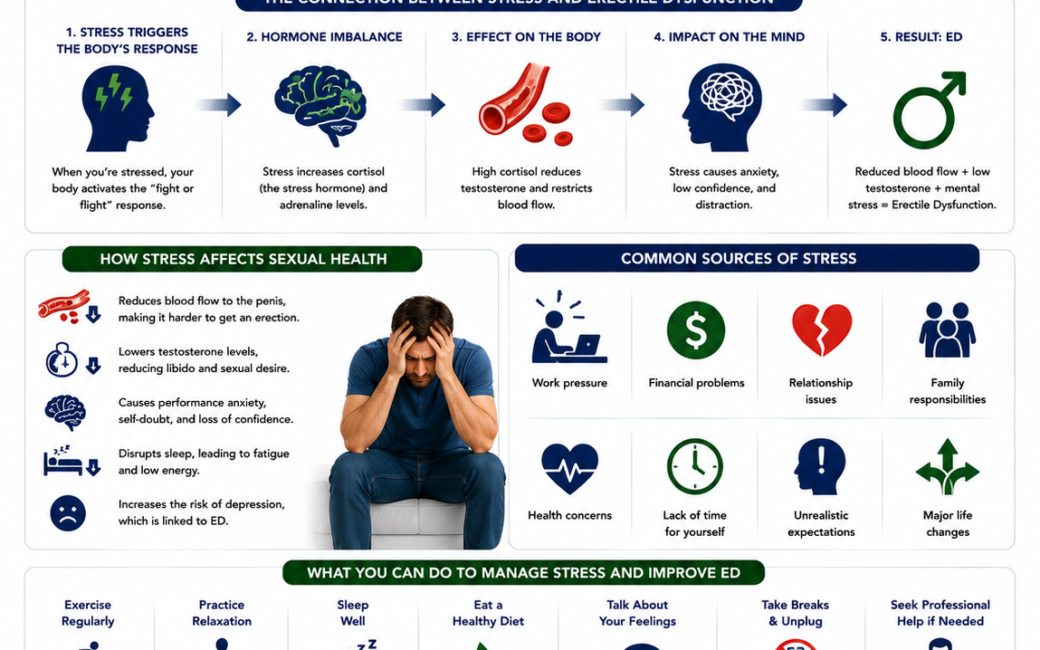
Stress can have a significant impact on a man’s sexual health, particularly when it comes to ED. When a man is stressed, his body releases stress hormones such as cortisol and adrenaline. These hormones can disrupt the normal functioning of the body, including the blood flow to the penis. Reduced blood flow to the penis can make it difficult to achieve or maintain an erection, leading to ED.
In addition to disrupting blood flow, stress can also affect a man’s mental health, leading to anxiety, depression, and low self-esteem. These mental health issues can further exacerbate ED, making it even more challenging to achieve or maintain an erection.
How Stress Affects the Body
When a man is stressed, his body undergoes a series of physiological changes that can affect his sexual health. Some of the ways stress affects the body include:
- Increased cortisol levels: Cortisol is a stress hormone that can disrupt the normal functioning of the body. High levels of cortisol can reduce blood flow to the penis, making it difficult to achieve or maintain an erection.
- Reduced testosterone levels: Testosterone is a hormone that plays a crucial role in male sexual health. Stress can reduce testosterone levels, leading to decreased libido and ED.
- Disrupted sleep patterns: Stress can disrupt sleep patterns, leading to fatigue, anxiety, and depression. Poor sleep quality can further exacerbate ED.
- Increased blood pressure: Stress can increase blood pressure, which can reduce blood flow to the penis and contribute to ED.
Managing Stress to Improve ED
While stress can contribute to ED, there are many ways to manage stress and improve erectile function. Some strategies for managing stress include:
- Exercise regularly: Regular exercise can help reduce stress, improve mood, and boost self-esteem. Exercise can also improve blood flow to the penis, making it easier to achieve or maintain an erection.
- Practice relaxation techniques: Relaxation techniques such as deep breathing, meditation, and yoga can help reduce stress and anxiety.
- Get enough sleep: Getting enough sleep is essential for physical and mental health. Aim for 7-8 hours of sleep per night to help reduce stress and improve ED.
- Seek support: Talk to a friend, family member, or mental health professional about your stress and ED. Sharing your feelings and concerns can help you feel supported and empowered to make positive changes.
Lifestyle Changes to Improve ED
In addition to managing stress, there are several lifestyle changes that can help improve ED. Some of these changes include:
- Quit smoking: Smoking can reduce blood flow to the penis, making it difficult to achieve or maintain an erection. Quitting smoking can improve ED and overall health.
- Limit alcohol consumption: Excessive alcohol consumption can contribute to ED. Limiting alcohol intake can help improve erectile function.
- Eat a healthy diet: A healthy diet rich in fruits, vegetables, and whole grains can help improve ED. Avoid processed and sugary foods that can contribute to inflammation and oxidative stress.
- Get regular check-ups: Regular health check-ups can help identify underlying medical conditions that may be contributing to ED. Addressing these conditions can help improve erectile function.
Seeking Medical Help for ED
While lifestyle changes and stress management can help improve ED, seeking medical help may be necessary for some men. If you’re experiencing persistent or severe ED, talk to your doctor about your symptoms. Your doctor may recommend:
- Medications: Medications such as sildenafil (Viagra), tadalafil (Cialis), and vardenafil (Levitra) can help improve ED.
- Therapy: Therapy, such as cognitive-behavioral therapy (CBT), can help address underlying psychological issues contributing to ED.
- Lifestyle modifications: Your doctor may recommend lifestyle modifications, such as weight loss, exercise, or smoking cessation, to help improve ED.
Conclusion
Stress can have a significant impact on a man’s sexual health, particularly when it comes to ED. By understanding the connection between stress and ED, men can take steps to manage stress and improve erectile function. Lifestyle changes, such as regular exercise, healthy eating, and stress management, can help improve ED. If you’re experiencing persistent or severe ED, seek medical help to address underlying medical conditions and develop a treatment plan. Remember, ED is a common condition that can be treated, and there is help available.