


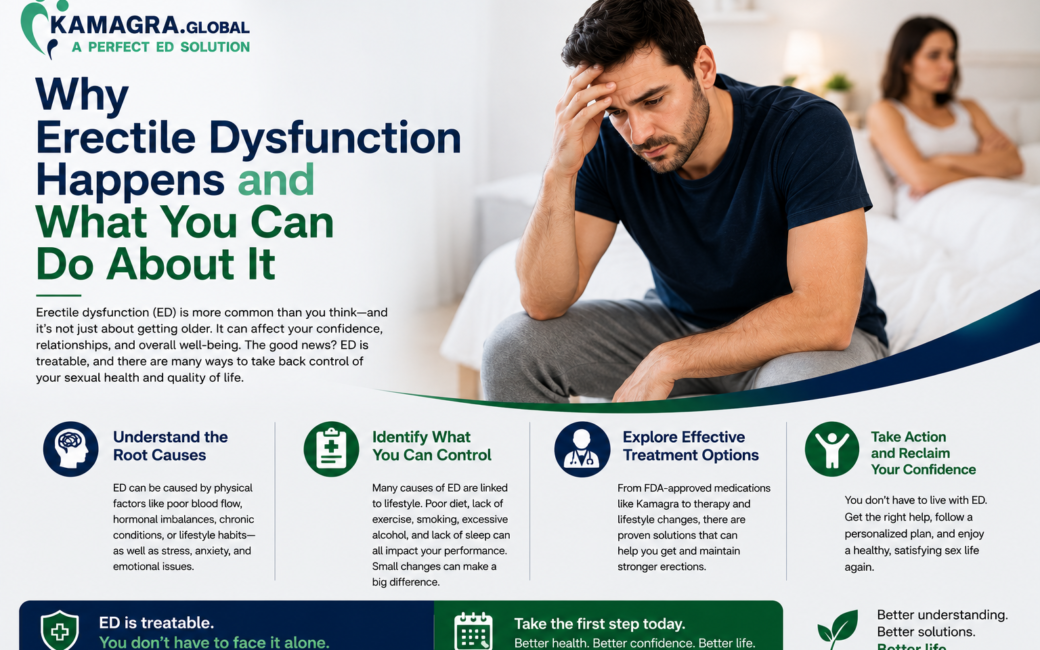
Why Erectile Dysfunction Happens and What You Can Do About It
Erectile dysfunction (ED), also known as impotence, is a common condition that affects millions of men worldwide. It is characterized by the inability to achieve or maintain an erection sufficient for satisfactory sexual performance. ED can be a challenging and embarrassing issue, but it is essential to understand that it is a treatable condition.
What Causes Erectile Dysfunction?
ED can be caused by a combination of physical, psychological, and lifestyle factors. Some of the most common causes of ED include:
- Vascular diseases: Conditions such as atherosclerosis, high blood pressure, and diabetes can damage blood vessels and reduce blood flow to the penis, making it difficult to achieve an erection.
- Neurological disorders: Conditions such as Parkinson’s disease, multiple sclerosis, and spinal cord injuries can damage the nerves that control erection.
- Hormonal imbalances: Low levels of testosterone, high levels of prolactin, or other hormonal imbalances can contribute to ED.
- Medications: Certain medications, such as antidepressants, antihistamines, and blood pressure medications, can cause ED as a side effect.
- Psychological factors: Stress, anxiety, depression, and relationship problems can contribute to ED.
- Lifestyle factors: Smoking, excessive alcohol consumption, and lack of exercise can also contribute to ED.
Symptoms of Erectile Dysfunction
The symptoms of ED can vary from person to person, but common symptoms include:
- Difficulty achieving an erection
- Dificulty maintaining an erection
- Reduced sexual desire
- Premature ejaculation
- Delayed ejaculation
Diagnosing Erectile Dysfunction
Diagnosing ED typically involves a physical examination, medical history, and laboratory tests. Your doctor may:
- Perform a physical examination to check for any underlying medical conditions that may be contributing to ED.
- Ask about your medical history to identify any medications or conditions that may be contributing to ED.
- Conduct laboratory tests, such as blood tests, to check for hormonal imbalances or other underlying conditions.
Treatments for Erectile Dysfunction
There are several treatments available for ED, including:
- Medications: Oral medications such as sildenafil (Viagra), tadalafil (Cialis), and vardenafil (Levitra) can help improve blood flow to the penis and achieve an erection.
- Vacuum erection devices: A vacuum device can be used to create an erection by drawing blood into the penis.
- Penile injections: Injecting medication into the penis can help achieve an erection.
- Penile implants: Surgical implantation of a device that can be inflated to achieve an erection.
- Lifestyle changes: Making lifestyle changes such as quitting smoking, reducing alcohol consumption, and increasing exercise can also help improve ED.
Natural Remedies for Erectile Dysfunction
There are several natural remedies that may help improve ED, including:
- Exercise: Regular exercise can help improve blood flow and reduce stress.
- Herbal supplements: Certain herbal supplements such as ginseng, horny goat weed, and damiana may help improve ED.
- Aromatherapy: Certain essential oils such as lavender and rose may help reduce stress and improve mood.
- Mindfulness and relaxation techniques: Techniques such as meditation and deep breathing can help reduce stress and improve overall well-being.
Preventing Erectile Dysfunction
While ED can be treated, it is also essential to take steps to prevent it. Some ways to prevent ED include:
- Maintaining a healthy lifestyle: Eating a healthy diet, exercising regularly, and getting enough sleep can help reduce the risk of ED.
- Managing underlying medical conditions: Managing conditions such as diabetes, high blood pressure, and high cholesterol can help reduce the risk of ED.
- Reducing stress: Reducing stress through techniques such as meditation and deep breathing can help improve overall well-being and reduce the risk of ED.
- Quitting smoking: Quitting smoking can help improve blood flow and reduce the risk of ED.
Conclusion
ED is a common condition that can be challenging and embarrassing, but it is essential to understand that it is a treatable condition. By understanding the causes and symptoms of ED, and seeking medical attention if necessary, men can take the first step towards a healthier sex life. Making lifestyle changes, seeking natural remedies, and preventing ED can also help improve overall well-being and reduce the risk of ED.
Note: This is a basic HTML structure, you can add more tags and stylings to make it more visually appealing. Also, the content is written with a focus on SEO, with relevant keywords and phrases included throughout the text.