


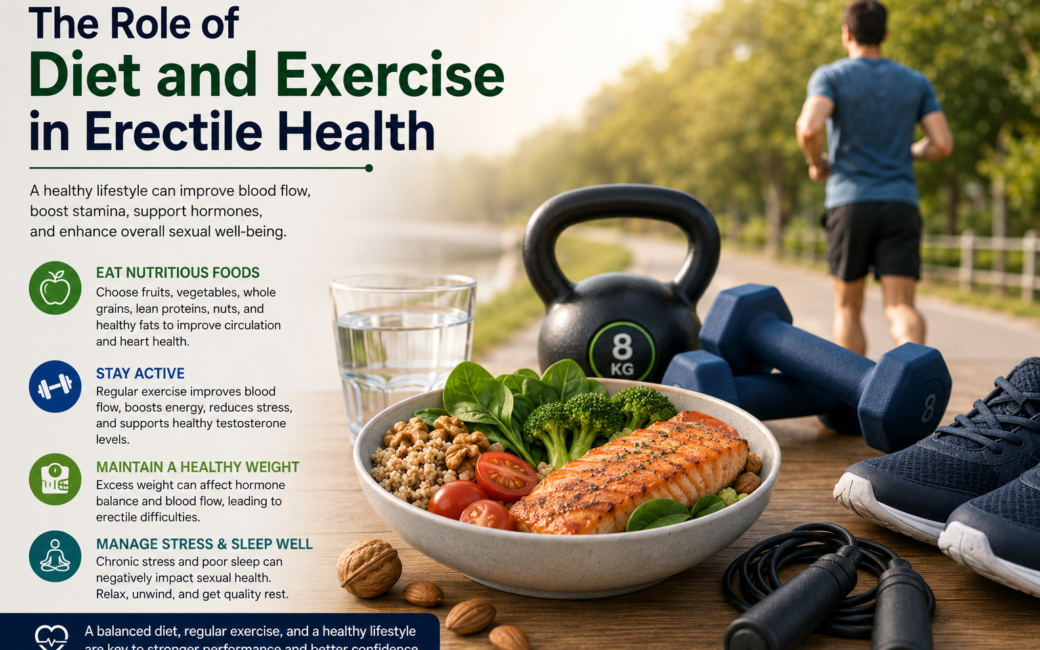
The Role of Diet and Exercise in Erectile Health
Erectile health is a critical aspect of a man’s overall well-being, and it’s closely linked to his lifestyle choices. A healthy diet and regular exercise can significantly impact erectile function, and in this blog, we’ll explore the role of diet and exercise in maintaining good erectile health.
Introduction to Erectile Health
Erectile dysfunction (ED) is a common condition that affects millions of men worldwide. It’s characterized by the inability to achieve or maintain an erection sufficient for satisfactory sexual performance. ED can have various causes, including physical, psychological, and lifestyle factors. While age is a significant risk factor, younger men can also experience ED due to poor lifestyle choices.
The Impact of Diet on Erectile Health
Diet plays a crucial role in maintaining good erectile health. A diet rich in whole foods, fruits, vegetables, and whole grains can help support erectile function. On the other hand, a diet high in processed foods, sugar, and saturated fats can negatively impact erectile health. Here are some key dietary factors to consider:
- Fruits and Vegetables: Fruits and vegetables are rich in antioxidants, fiber, and essential nutrients that support erectile health. Include a variety of colorful fruits and vegetables in your diet, such as berries, leafy greens, and citrus fruits.
- Whole Grains: Whole grains, such as brown rice, quinoa, and whole-wheat bread, are rich in fiber, vitamins, and minerals that support erectile health.
- Lean Protein: Lean protein sources, such as chicken, fish, and beans, can help support erectile health. Avoid processed meats and opt for grass-fed, organic options when possible.
- Healthy Fats: Healthy fats, such as avocado, nuts, and olive oil, are essential for hormone production and can support erectile health.
- Sugar and Processed Foods: Limit your intake of sugary drinks, processed snacks, and saturated fats, as they can negatively impact erectile health.
The Impact of Exercise on Erectile Health
Regular exercise is essential for maintaining good erectile health. Exercise can help improve blood flow, reduce stress, and boost testosterone levels. Here are some key exercise factors to consider:
- Aerobic Exercise: Aerobic exercises, such as walking, running, and cycling, can help improve cardiovascular health and increase blood flow to the penis.
- Resistance Training: Resistance training, such as weightlifting and bodyweight exercises, can help improve testosterone levels and overall muscle mass.
- Flexibility and Stretching: Flexibility and stretching exercises, such as yoga and Pilates, can help improve blood flow and reduce stress.
- High-Intensity Interval Training (HIIT): HIIT involves short bursts of intense exercise followed by brief periods of rest. This type of exercise can help improve cardiovascular health and boost testosterone levels.
Additional Lifestyle Factors
In addition to diet and exercise, there are several other lifestyle factors that can impact erectile health. These include:
- Stress Management: Chronic stress can negatively impact erectile health. Engage in stress-reducing activities, such as meditation, yoga, or deep breathing exercises.
- Sleep: Adequate sleep is essential for hormone production and overall health. Aim for 7-8 hours of sleep per night.
- Smoking and Substance Abuse: Smoking and substance abuse can negatively impact erectile health. Quit smoking and avoid excessive alcohol consumption.
- Regular Check-Ups: Regular health check-ups can help identify underlying health issues that may be impacting erectile health.
Conclusion
Maintaining good erectile health requires a holistic approach that incorporates a healthy diet, regular exercise, and a balanced lifestyle. By following the tips outlined in this blog, you can support erectile function and overall well-being. Remember to consult with a healthcare professional if you’re experiencing persistent ED or other health concerns.
Recommendations
Here are some additional recommendations for maintaining good erectile health:
- Keep a Food Diary: Track your food intake to identify patterns and make healthier choices.
- Find an Exercise Routine You Enjoy: Engage in physical activities that you enjoy, such as hiking, swimming, or team sports.
- Practice Stress-Reducing Techniques: Regularly practice stress-reducing activities, such as meditation or yoga.
- Get Enough Sleep: Prioritize sleep and aim for 7-8 hours per night.
- Stay Hydrated: Drink plenty of water throughout the day to stay hydrated and support overall health.
Final Thoughts