



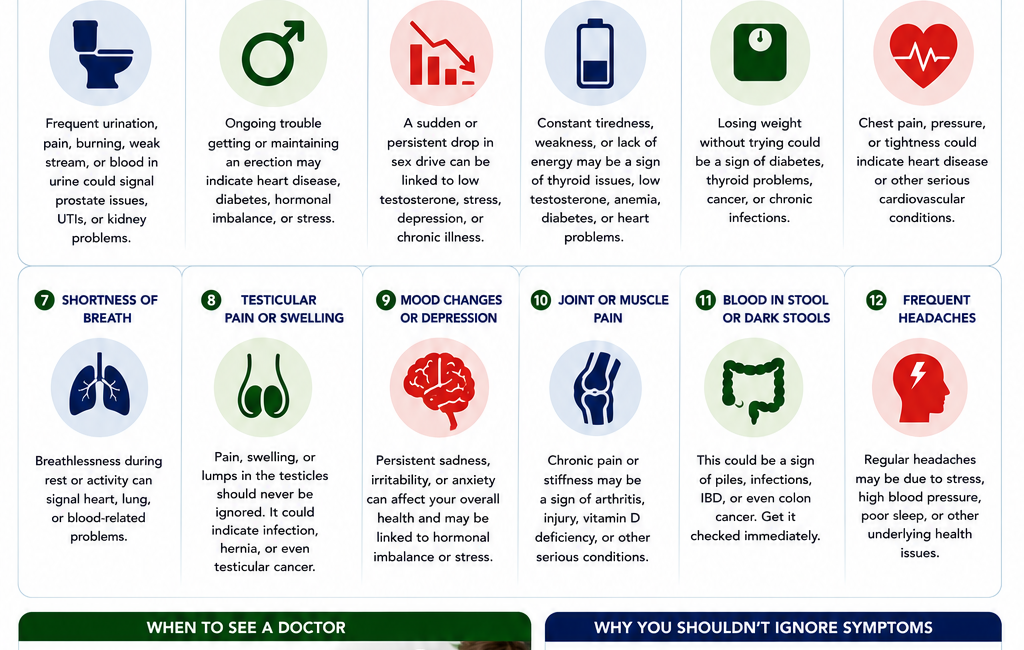
Men’s Health Symptoms You Should Never Ignore
As men, we often tend to ignore our health symptoms, thinking they will go away on their own or that we’re too busy to deal with them. However, ignoring certain health symptoms can lead to severe consequences, including chronic diseases, disabilities, and even death. In this article, we’ll discuss the top men’s health symptoms you should never ignore and provide you with the knowledge to take proactive steps towards a healthier life.
1. Chest Pain or Discomfort
Chest pain or discomfort is one of the most critical men’s health symptoms you should never ignore. It can be a sign of a heart attack, which is a leading cause of death among men. If you experience any of the following symptoms, seek medical attention immediately:
- Chest pain or discomfort that feels like pressure, squeezing, or fullness
- Pain or discomfort in one or both arms, the back, neck, jaw, or stomach
- Shortness of breath or cold sweats
- Feeling weak, lightheaded, or faint
Don’t assume that chest pain is just indigestion or gas. If you’re unsure, it’s always better to err on the side of caution and seek medical help.
2. Erectile Dysfunction (ED)
Erectile dysfunction (ED) is a common men’s health symptom that can be embarrassing to discuss, but it’s essential to address. ED can be a sign of underlying health issues, such as:
- Diabetes
- High blood pressure
- High cholesterol
- Obesity
- Low testosterone
If you’re experiencing ED, don’t ignore it. Talk to your doctor about your symptoms, and they can help you determine the underlying cause and develop a treatment plan.
3. Unexplained Weight Loss
Unexplained weight loss is a men’s health symptom that can be a sign of a serious underlying condition, such as:
- Cancer
- Diabetes
- Thyroid disease
- Infections, such as tuberculosis or HIV
If you’ve lost weight without trying, it’s essential to see your doctor to rule out any underlying health issues. Your doctor can perform tests to determine the cause of your weight loss and develop a treatment plan.
4. Changes in Urination
Changes in urination can be a sign of a men’s health issue, such as:
- Prostate problems, such as an enlarged prostate or prostate cancer
- Urinary tract infections (UTIs)
- Kidney stones
- Diabetes
If you experience any of the following symptoms, see your doctor:
- Frequent or painful urination
- Weak or interrupted flow of urine
- Painful or burning sensation while urinating
- Blood in the urine
5. Skin Changes
Skin changes can be a sign of a men’s health issue, such as:
- Skin cancer
- Autoimmune disorders, such as psoriasis or eczema
- Allergic reactions
If you notice any of the following skin changes, see your doctor:
- New moles or changes in existing moles
- Unexplained rash or itching
- Changes in skin color or texture
6. Hair Loss
Hair loss can be a sign of a men’s health issue, such as:
- Low testosterone
- Thyroid disease
- Alopecia areata (an autoimmune disease that causes hair loss)
If you’re experiencing hair loss, talk to your doctor about your symptoms. They can help you determine the underlying cause and develop a treatment plan.
7. Digestive Issues
Digestive issues can be a sign of a men’s health issue, such as:
- Irritable bowel syndrome (IBS)
- Inflammatory bowel disease (IBD), such as Crohn’s disease or ulcerative colitis
- Gastroesophageal reflux disease (GERD)
If you experience any of the following symptoms, see your doctor:
- Abdominal pain or cramping
- Diarrhea or constipation
- Bloody stools
- Unexplained weight loss
8. Mood Changes
Mood changes can be a sign of a men’s health issue, such as:
- Depression
- Anxiety
- Low testosterone
If you experience any of the following symptoms, talk to your doctor:
- Feeling sad, hopeless, or helpless
- Loss of interest in activities you once enjoyed
- Changes in appetite or sleep patterns
- Difficulty concentrating or making decisions
9. Fatigue
Fatigue can be a sign of a men’s health issue, such as:
- Anemia
- Diabetes
- Sleep apnea
- Low testosterone
If you’re feeling tired or exhausted, talk to your doctor about your symptoms. They can help you determine the underlying cause and develop a treatment plan.
10. Swollen Feet or Ankles
Swollen feet or ankles can be a sign of a men’s health issue, such as:
- Heart failure
- Kidney disease
- Liver disease
- Deep vein thrombosis (DVT)
If you notice any of the following symptoms, see your doctor:
- Swelling in the feet, ankles, or legs
- Pain or tenderness in the affected area
- Redness or warmth in the affected area
In conclusion, men’s health symptoms can be subtle, but ignoring them can lead to severe consequences. By being aware of these top men’s health symptoms, you can take proactive steps towards a healthier life. Remember, it’s always better to err on the side of caution and seek medical attention if you’re unsure about any symptoms you’re experiencing.
Don’t wait until it’s too late. Take control of your health today and schedule an appointment with your doctor to discuss any concerns you may have.
What to Do Next
If you’re experiencing any of the men’s health symptoms mentioned in this article, take the following steps:
- Schedule an appointment with your doctor to discuss your symptoms
- Be honest and open with your doctor about your symptoms and medical history
- Follow your doctor’s recommendations for testing and treatment
- Make lifestyle changes to reduce your risk of chronic diseases, such as maintaining a healthy diet, exercising regularly, and getting enough sleep
By taking proactive steps towards your health, you can reduce your risk of chronic diseases and improve your overall well-being. Remember, your health is in your hands.
