



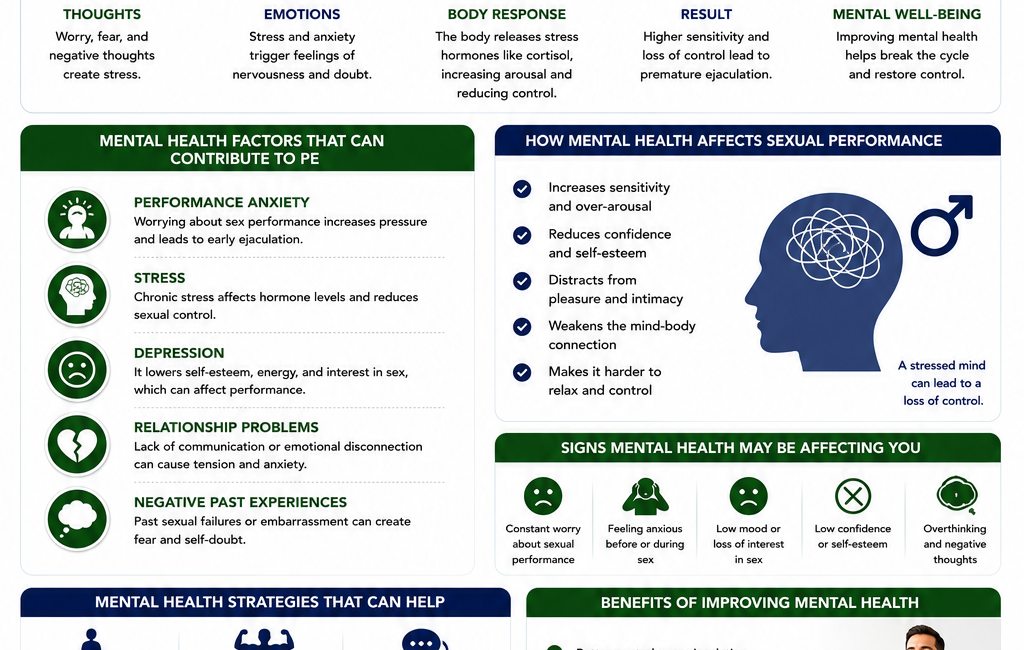
Premature Ejaculation and Mental Health Connection: Understanding the Link
Premature ejaculation (PE) is a common sexual health issue that affects millions of men worldwide. While it is often viewed as a physical problem, research suggests that there is a significant link between premature ejaculation and mental health. In this blog, we will delve into the connection between PE and mental health, exploring the causes, symptoms, and treatment options available.
What is Premature Ejaculation?
Premature ejaculation is a condition where a man ejaculates sooner than he or his partner would like. It is defined as ejaculation that occurs within one minute of vaginal penetration, or when a man is unable to control his ejaculation during sex. PE can be a source of significant distress and anxiety for men, affecting their self-esteem, relationships, and overall quality of life.
The Connection between Premature Ejaculation and Mental Health
Research has shown that premature ejaculation is often linked to mental health issues, such as anxiety, depression, and stress. Men with PE may experience feelings of shame, guilt, and inadequacy, which can exacerbate their mental health problems. The emotional distress caused by PE can lead to a vicious cycle, where the anxiety and stress of performing sexually can contribute to further episodes of premature ejaculation.
Anxiety and Premature Ejaculation
Anxiety is a common comorbidity with premature ejaculation. Men with PE may experience performance anxiety, fear of failure, or fear of being judged by their partner. This anxiety can lead to a heightened state of arousal, making it more difficult to control ejaculation. Additionally, anxiety can interfere with a man’s ability to relax and enjoy sex, further exacerbating the problem.
Depression and Premature Ejaculation
Depression is another mental health issue that is often linked to premature ejaculation. Men with PE may experience feelings of hopelessness, low self-esteem, and a lack of interest in sex. Depression can also affect a man’s ability to respond to treatment, as it can interfere with his motivation and ability to engage in therapy.
Stress and Premature Ejaculation
Stress is a significant contributor to premature ejaculation. Men who are experiencing stress in their daily lives may find it more difficult to control their ejaculation during sex. Stress can also lead to a decrease in libido, making it more challenging to achieve and maintain an erection.
Causes of Premature Ejaculation
The causes of premature ejaculation are complex and multifaceted. Some of the possible causes include:
- Biological factors: Abnormal hormone levels, thyroid problems, or prostate issues can contribute to PE.
- Psychological factors: Anxiety, depression, and stress can all contribute to PE.
- Neurological factors: Certain neurological disorders, such as multiple sclerosis or Parkinson’s disease, can affect the nerves that control ejaculation.
- Medications: Certain medications, such as antidepressants or blood pressure medications, can contribute to PE.
Symptoms of Premature Ejaculation
The symptoms of premature ejaculation can vary from man to man. Some common symptoms include:
- Ejaculation that occurs within one minute of vaginal penetration.
- Inability to control ejaculation during sex.
- Feeling of anxiety or stress during sex.
- Avoidance of sex due to fear of premature ejaculation.
Treatment Options for Premature Ejaculation
Treatment for premature ejaculation depends on the underlying cause of the condition. Some possible treatment options include:
- Medications: Certain medications, such as selective serotonin reuptake inhibitors (SSRIs), can help to delay ejaculation.
- Behavioral therapy: Techniques such as the “stop-start” method or the “squeeze” method can help men to control their ejaculation.
- Cognitive-behavioral therapy (CBT): CBT can help men to address underlying psychological issues that may be contributing to their PE.
- Relaxation techniques: Techniques such as deep breathing, progressive muscle relaxation, or mindfulness can help to reduce stress and anxiety during sex.
Conclusion
Premature ejaculation is a complex condition that is often linked to mental health issues, such as anxiety, depression, and stress. By understanding the connection between PE and mental health, men can take the first step towards seeking treatment and improving their overall quality of life. If you are experiencing symptoms of premature ejaculation, it is essential to seek help from a healthcare professional. With the right treatment and support, it is possible to overcome PE and enjoy a healthy and fulfilling sex life.
Additional Resources
For more information on premature ejaculation and mental health, please visit the following resources:
- American Psychological Association (APA): https://www.apa.org
- National Institute of Mental Health (NIMH): https://www.nimh.nih.gov
- Mayo Clinic: https://www.mayoclinic.org
