



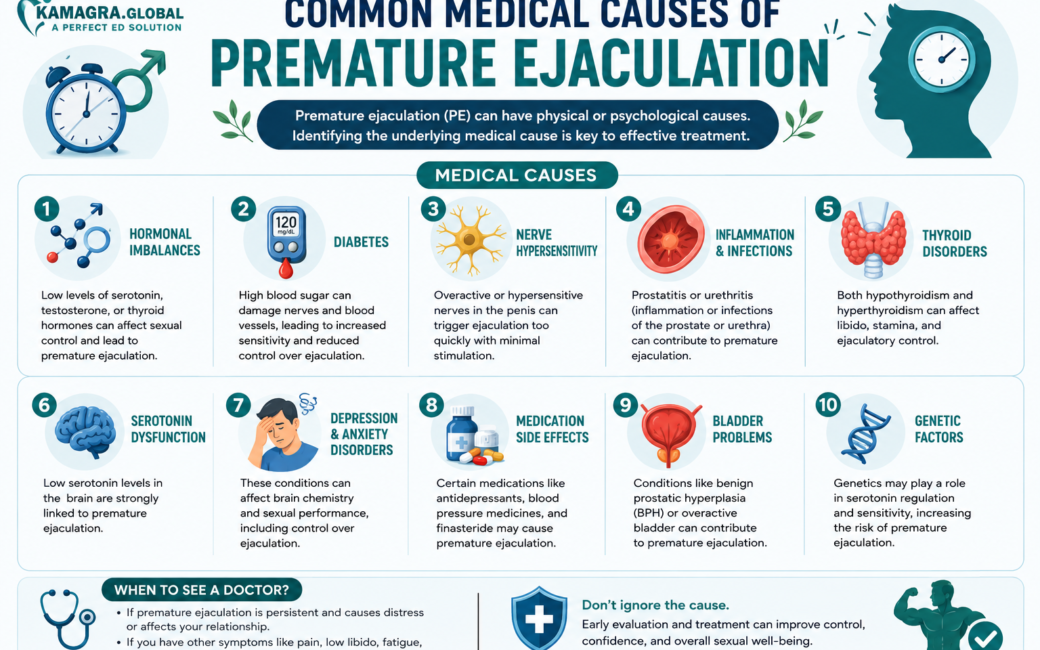
Common Medical Causes of Premature Ejaculation
Premature ejaculation (PE) is a common sexual issue affecting many men worldwide. It is characterized by ejaculation that always or nearly always occurs prior to or within about 1 minute of vaginal penetration, or a clinically significant and bothersome reduction in latency, often to about 3 minutes or less.
What are the Medical Causes of Premature Ejaculation?
While psychological factors such as anxiety, stress, and depression can contribute to premature ejaculation, there are also several medical causes that can lead to this condition. Some of the common medical causes of premature ejaculation include:
- Neurological disorders: Certain neurological disorders such as multiple sclerosis, Parkinson’s disease, and spinal cord injuries can affect the nerve pathways that control ejaculation, leading to premature ejaculation.
- Hormonal imbalances: Hormonal imbalances, particularly low levels of testosterone or high levels of thyroid hormone, can contribute to premature ejaculation.
- Erectile dysfunction: Men with erectile dysfunction (ED) may experience premature ejaculation as a result of anxiety or stress related to achieving and maintaining an erection.
- Prostate problems: Prostate issues such as prostatitis (inflammation of the prostate gland) or benign prostatic hyperplasia (enlarged prostate) can cause premature ejaculation.
- Urinary tract infections: Urinary tract infections (UTIs) can cause irritation and inflammation in the genital area, leading to premature ejaculation.
- Diabetes: Men with diabetes are at a higher risk of developing premature ejaculation due to nerve damage (neuropathy) and vascular problems.
- High blood pressure: Uncontrolled high blood pressure can damage blood vessels and lead to premature ejaculation.
- Certain medications: Certain medications, such as antidepressants, blood pressure medications, and decongestants, can contribute to premature ejaculation as a side effect.
Other Medical Conditions that May Contribute to Premature Ejaculation
In addition to the medical causes listed above, there are other medical conditions that may contribute to premature ejaculation, including:
- Thyroid disorders: Both hyperthyroidism (an overactive thyroid gland) and hypothyroidism (an underactive thyroid gland) can affect sexual function and lead to premature ejaculation.
- Adrenal gland disorders: Disorders of the adrenal gland, such as Cushing’s syndrome, can affect hormone levels and contribute to premature ejaculation.
- Pituitary gland disorders: Disorders of the pituitary gland, such as a pituitary tumor, can affect hormone production and lead to premature ejaculation.
- Sleep disorders: Sleep disorders, such as sleep apnea or insomnia, can affect hormone levels and contribute to premature ejaculation.
- Nutritional deficiencies: Deficiencies in nutrients such as zinc, magnesium, and vitamin D can affect sexual function and lead to premature ejaculation.
How to Diagnose Premature Ejaculation
To diagnose premature ejaculation, a healthcare provider will typically perform a physical exam and take a medical history. The healthcare provider may ask questions about:
- Sexual history and experiences
- Medical conditions and medications
- Lifestyle habits, such as smoking and alcohol consumption
- Stress and anxiety levels
The healthcare provider may also perform tests to rule out underlying medical conditions, such as:
- Urinalysis to check for UTIs or other infections
- Blood tests to check hormone levels and glucose levels
- Prostate-specific antigen (PSA) test to check for prostate problems
Treatment Options for Premature Ejaculation
Treatment for premature ejaculation depends on the underlying cause. If an underlying medical condition is contributing to premature ejaculation, treating the condition may help alleviate symptoms. Other treatment options include:
- Behavioral therapy: Behavioral therapy, such as cognitive-behavioral therapy (CBT), can help individuals with premature ejaculation manage stress, anxiety, and other psychological factors that contribute to the condition.
- Medications: Certain medications, such as selective serotonin reuptake inhibitors (SSRIs), can help delay ejaculation.
- Topical anesthetics: Topical anesthetics, such as lidocaine or benzocaine, can be applied to the penis to reduce sensitivity and delay ejaculation.
- Exercise and lifestyle changes: Regular exercise, stress management, and lifestyle changes, such as quitting smoking and reducing alcohol consumption, can help improve overall health and reduce symptoms of premature ejaculation.
Conclusion
Premature ejaculation is a common issue that affects many men. While psychological factors can contribute to this condition, there are also several medical causes that can lead to premature ejaculation. By understanding the underlying medical causes of premature ejaculation, individuals can seek proper diagnosis and treatment. If you are experiencing symptoms of premature ejaculation, it is essential to consult with a healthcare provider to rule out underlying medical conditions and develop a treatment plan that is right for you.
Additional Resources
For more information on premature ejaculation and its treatment options, please visit the following resources:
