


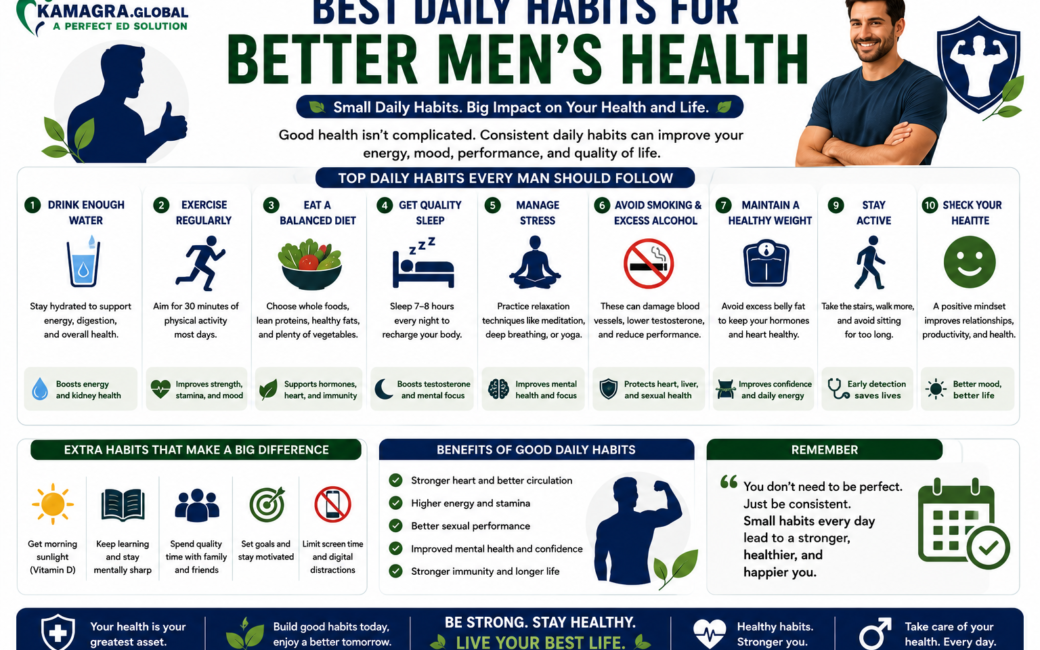
Best Daily Habits for Better Men’s Health
As men, we often prioritize our work and other responsibilities over our own health and wellbeing. However, neglecting our health can have serious consequences, from decreased energy and productivity to increased risk of chronic diseases like heart disease, diabetes, and cancer. The good news is that by incorporating a few simple daily habits into our routine, we can significantly improve our overall health and wellbeing.
1. Exercise Regularly
Regular exercise is one of the most effective ways to improve men’s health. Exercise can help us maintain a healthy weight, boost our energy levels, and reduce our risk of chronic diseases. Aim to do at least 30 minutes of moderate-intensity exercise per day, such as brisk walking, cycling, or swimming. You can also incorporate strength training exercises, like weightlifting or bodyweight exercises, to build muscle and boost your metabolism.
Some examples of daily exercise habits include:
- Waking up 30 minutes earlier each day to go for a run or do a quick workout
- Taking a walk during your lunch break
- Doing a few push-ups or squats during commercial breaks while watching TV
- Playing a sport or recreational activity with friends or family
2. Eat a Balanced Diet
Eating a balanced diet is essential for maintaining good health. Focus on whole, unprocessed foods like fruits, vegetables, whole grains, lean proteins, and healthy fats. Aim to include a variety of different colored fruits and vegetables in your diet to ensure you’re getting a range of vitamins and minerals.
Some examples of healthy daily eating habits include:
- Starting your day with a nutritious breakfast, such as oatmeal with fruit or scrambled eggs with whole grain toast
- Packing a healthy lunch, such as a salad or a piece of fruit with nuts and cheese
- Drinking plenty of water throughout the day
- Avoiding processed and sugary snacks
3. Manage Stress
Chronic stress can have serious negative effects on men’s health, from decreased immune function to increased risk of anxiety and depression. There are many ways to manage stress, including exercise, meditation, and spending time in nature.
Some examples of daily stress-reducing habits include:
- Practicing deep breathing exercises or meditation
- Taking a walk outside during your lunch break
- Doing yoga or tai chi
- Writing in a journal or expressing yourself creatively
4. Get Enough Sleep
Getting enough sleep is essential for physical and mental health. Aim for 7-9 hours of sleep per night to help your body and mind function at their best.
Some examples of healthy sleep habits include:
- Establishing a consistent bedtime routine
- Creating a relaxing sleep environment, such as keeping the room cool and dark
- Avoiding screens and electronics before bedtime
- Getting some morning sunlight exposure to help regulate your circadian rhythms
5. Stay Hydrated
Staying hydrated is essential for physical health, from maintaining healthy skin and muscles to supporting digestive function. Aim to drink at least 8 cups (64 ounces) of water per day, and adjust your intake based on your individual needs and activity level.
Some examples of healthy hydration habits include:
- Drinking a glass of water as soon as you wake up
- Keeping a water bottle with you throughout the day
- Avoiding sugary drinks and caffeine, which can dehydrate you
- Eating hydrating foods, such as watermelon and cucumbers
6. Connect with Others
Social connection is essential for mental and emotional health. Make time to connect with friends, family, and community members, whether it’s through a weekly dinner date, a phone call, or a social media group.
Some examples of daily social connection habits include:
- Sending a text or making a phone call to a friend or loved one
- Meeting a friend for coffee or a walk
- Participating in a community group or club
- Volunteering or doing a favor for someone else
7. Practice Good Hygiene
Practicing good hygiene is essential for physical health, from preventing the spread of illness to maintaining healthy skin and teeth. Make sure to wash your hands regularly, shower or bathe daily, and brush and floss your teeth twice a day.
Some examples of daily hygiene habits include:
- Washing your hands before eating or after using the bathroom
- Showering or bathing daily, using soap and shampoo
- Brushing and flossing your teeth twice a day
- Using deodorant or antiperspirant to stay fresh
8. Stay Organized
Staying organized can help reduce stress and improve mental clarity. Make sure to prioritize your tasks, set realistic goals, and use tools like calendars and to-do lists to stay on track.
Some examples of daily organization habits include:
- Writing down your tasks and priorities for the day
- Using a planner or calendar to stay on track
- Breaking down large tasks into smaller, manageable chunks
- Creating a “to-don’t” list to avoid procrastination and distraction
9. Get Regular Check-Ups
Getting regular check-ups is essential for maintaining good health. Make sure to schedule regular appointments with your doctor, dentist, and other healthcare providers to catch any potential health issues early.
Some examples of regular check-up habits include:
- Scheduling an annual physical with your doctor
- Getting a dental check-up every 6 months
- Getting a vision exam every 1-2 years
- Staying up-to-date on recommended vaccinations and screenings
10. Practice Mindfulness
Practicing mindfulness can help reduce stress and improve mental clarity. Make sure to take time each day to focus on the present moment, without judgment or distraction.
Some examples of daily mindfulness habits include:
- Practicing deep breathing exercises or meditation
- Taking a mindful walk, paying attention to your surroundings
- Engaging in a creative activity, like drawing or writing
- Simply paying attention to your thoughts and emotions, without judgment
In conclusion, incorporating these daily habits into your routine can have a significant impact on your overall health and wellbeing. Remember to start small and be consistent, and don’t be afraid to seek help if you need it. By prioritizing your health and taking care of yourself, you can live a happier, healthier life.